
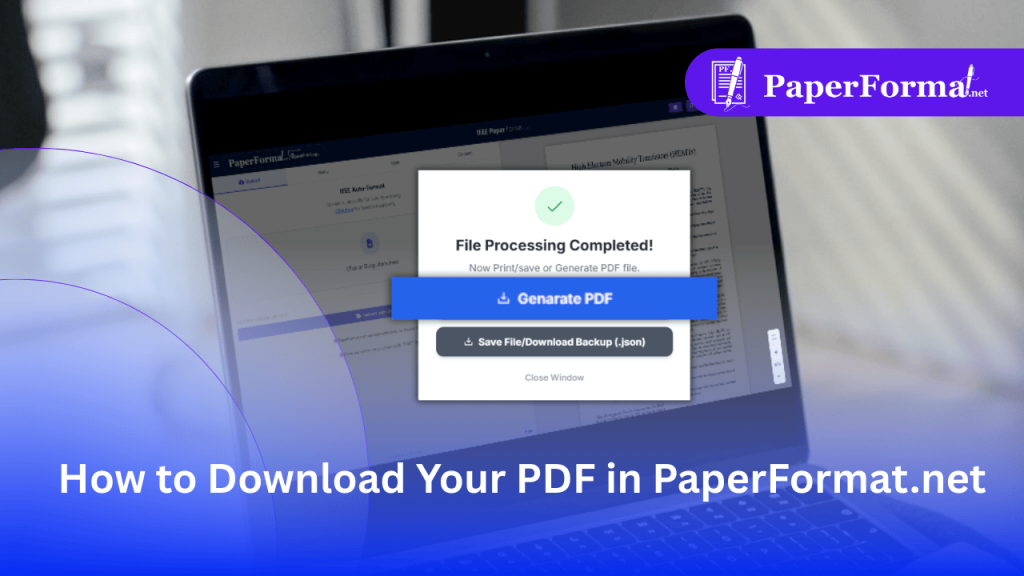
How to Download Your PDF in PaperFormat.net
The Final Step: Generating a Print-Ready PDF In IEEE paper formatting and Springer LNCS workflows, the final PDF must meet strict technical standards: PaperFormat.net handles all of this automatically. When you click “Generate PDF,” our engine compiles your workspace into a compliant file ready for upload to IEEE Xplore or SpringerLink. Step-by-Step: Downloading Your File […]
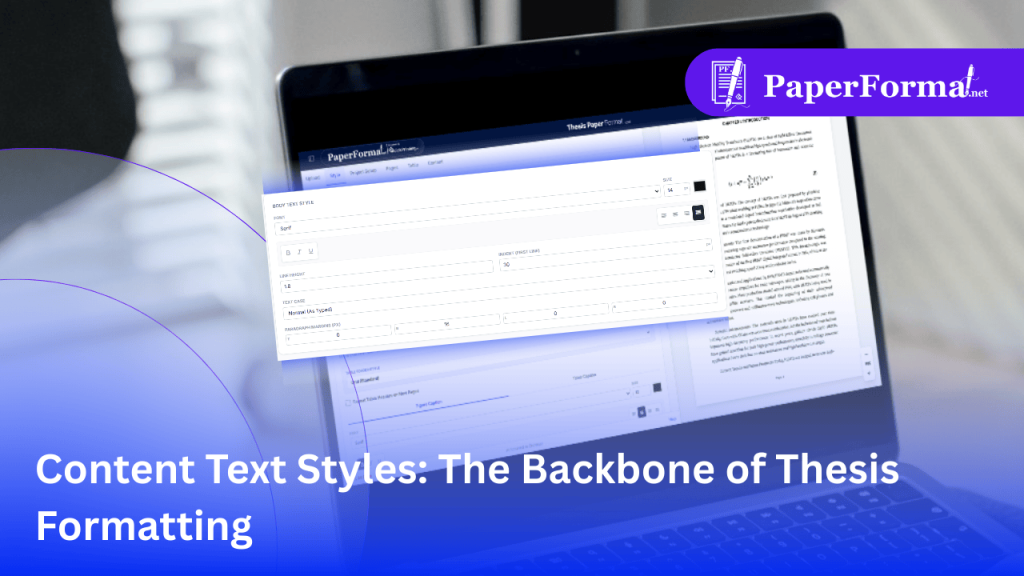
Content Text Styles: The Backbone of Thesis Formatting
Why Body Text Styling is Critical for Institute Papers In college and institute paper formatting, the “Body Text” accounts for 90% of your document. If this text is messy—with inconsistent fonts, uneven spacing, or ragged alignment—your entire thesis looks unprofessional. Universities are rigid about these rules. Standard requirements often include Serif fonts (like Times New […]
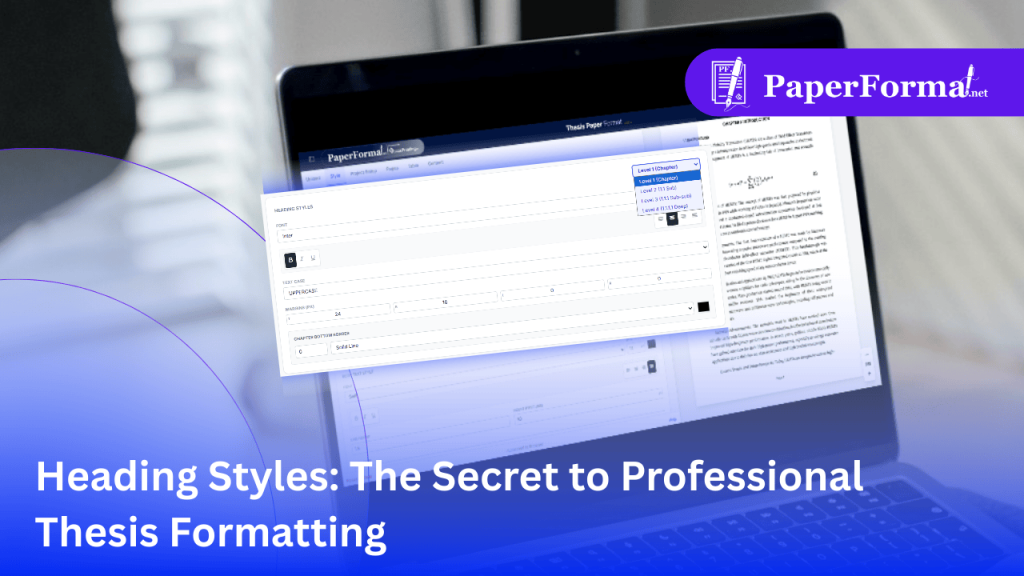
Heading Styles: The Secret to Professional Thesis Formatting
Why Heading Hierarchy Matters in Institute Papers In college and institute paper formatting, headings are more than just bold text—they define the structure of your argument. A proper hierarchy (Chapter > Section > Sub-section) is crucial for two reasons: PaperFormat.net allows you to define these styles globally. Change the font size for “Level 1” once, […]
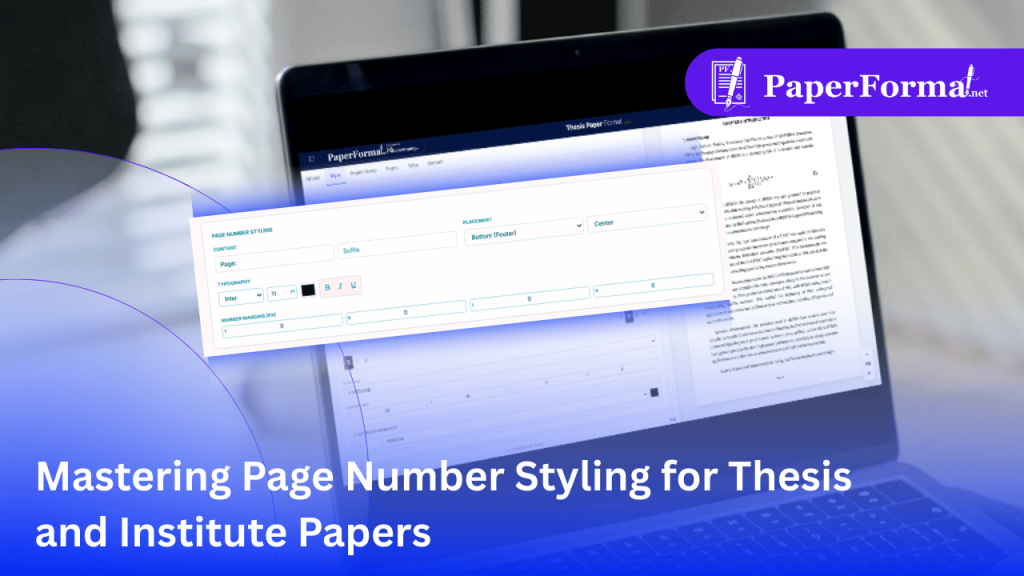
Mastering Page Number Styling for Thesis and Institute Papers
The Golden Rule of Academic Numbering In college and institute paper formatting, page numbers are not just simple counters—they are part of the document’s structure. Most universities require precise positioning (e.g., bottom-center) and specific styling that standard word processors struggle to handle automatically. PaperFormat.net simplifies this complex requirement. You can define exact placement, fonts, and […]
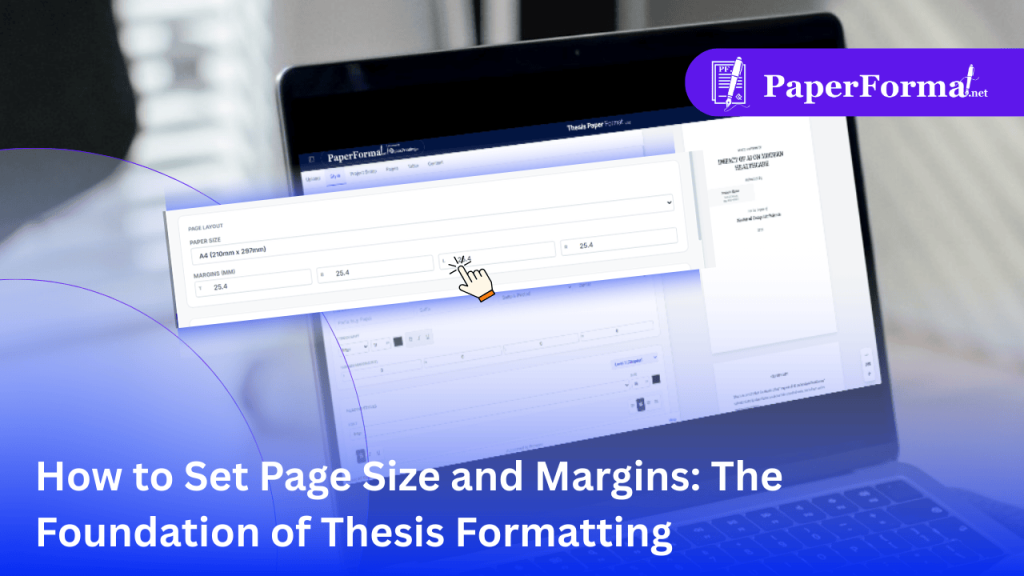
How to Set Page Size and Margins: The Foundation of Thesis Formatting
Why Page Layout Matters for Institute Papers In college and institute paper formatting, the physical layout of the page is the first thing examiners check. If your margins are too narrow, your text will disappear into the binding. If you use the wrong paper size (e.g., Letter instead of A4), your entire thesis formatting structure […]